


组织范式变革:高校哲学社会科学实验室
建设的探索与思考
Organizational paradigm change: Exploration and reflection on the construction
of philosophy and social science laboratories in universities
作者单位
李沅傧
中国人民大学 新闻与社会发展研究中心,北京 100872
LI Yuanbin
Journalism and Social Development Research Center, Renmin University of China, Beijing 100872, China
作者简介:
李沅傧(1994—),男,四川宜宾,硕士,馆员,主要研究方向为高等教育、智库管理、实验室管理等。
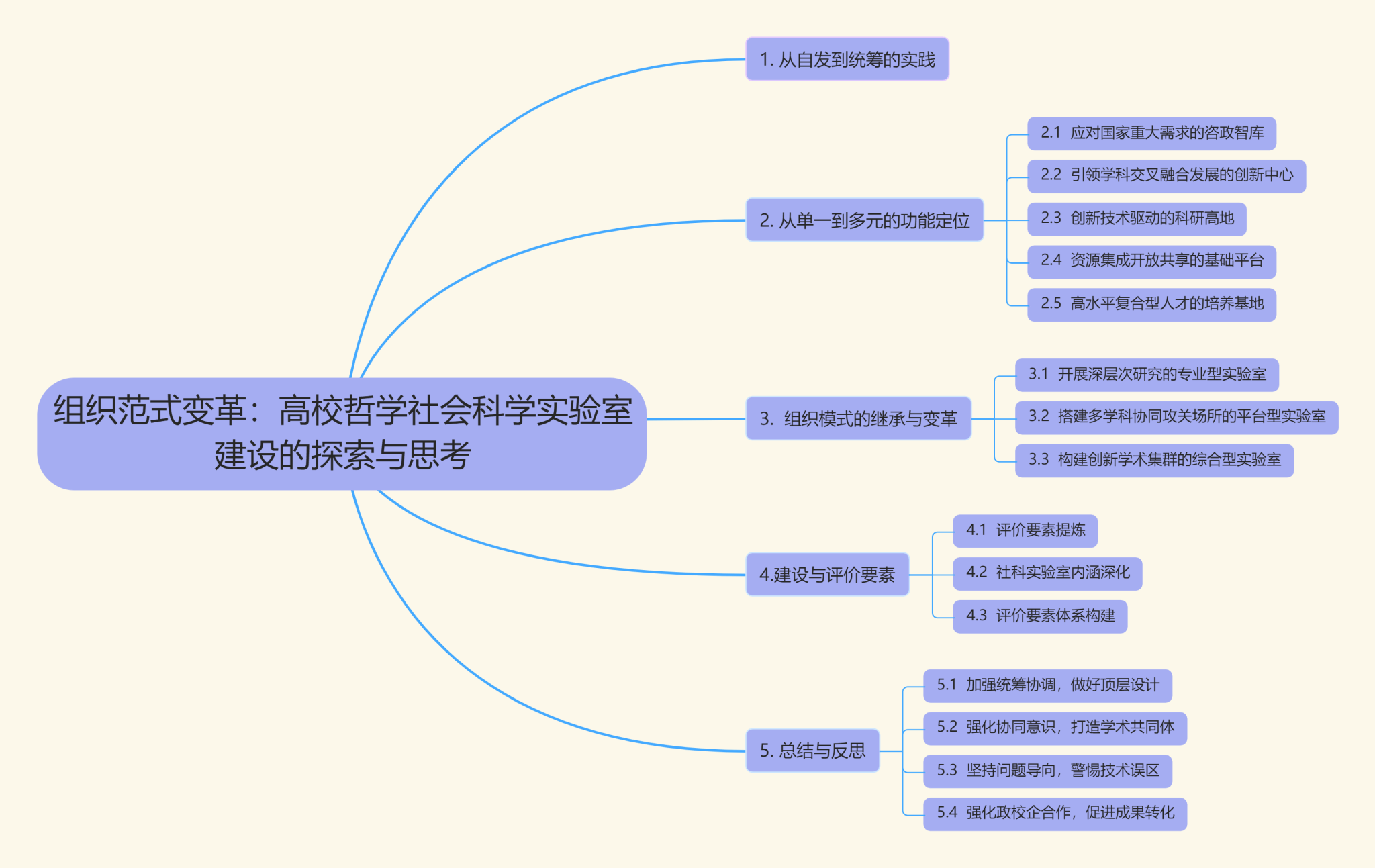
以下为本文目录结构

摘 要
在新一轮科技革命浪潮和“新文科”建设大背景下,哲学社会科学实验室作为先进技术与人文社科知识交叉融合的“交换机”,成为各高校追求科研组织模式变革、推动哲学社会科学高质量发展的重要突破点。相较于传统社科研究机构,社科实验室从诞生起就被赋予服务科学决策、推动学科建设、促进学术创新、汇聚研究数据、培育先进人才等功能定位。在研究需求方面,社科实验室存在专业型、平台型和综合型三种组织模式;在组织框架和资源构成方面,社科实验室具备研究目标、研究基础、组织管理、研究支撑和成果输出等五大核心要素。结合社科实验室的核心要素,该文初步构建了一套实验室评价要素体系,以期对高校建设高水平社科重点实验室提供参考。
Abstract: [Objective] Since the start of the 21st century, the information technology revolution has driven significant changes in social forms. Emerging technologies, such as artificial intelligence and big data, have given rise to new problems and more opportunities and have accelerated the transformation of philosophical and social science research. As the main battlefield for innovative research in philosophy and social sciences, universities urgently need to explore new research organizational paradigms to achieve theoretical, method, and achievement innovations in philosophy and social sciences to solve the comprehensive and complex problems of the economy and society. [Methods] This study is based on the background of the construction of “new liberal arts.” By sorting out the core issues that education management departments and academia have been most concerned about in recent years, this study starts from the philosophy and social science laboratory and proposes a “feasible solution” for universities to promote innovation in the higher education system and high-quality development of philosophy and social sciences. This study adopts a comparative analysis method, which analyzes and compares the development paths and models of social science laboratories at home and abroad combined with the existing construction situation of social science laboratories in China, comprehensively compares the advantages and disadvantages of the two construction models, and summarizes the main approach of “overall planning” for the construction of social science laboratories in Chinese universities in the future to catch up with the construction of foreign social science laboratories. Then, from the unique characteristics of social science laboratories compared with those of general social science research institutions, social science laboratories should be endowed with innovative functions in five aspects, i.e., serving scientific decision-making, promoting discipline construction, promoting academic innovation, aggregating research data, and cultivating advanced talents, which are the key elements that determine the level of social science laboratory construction. Based on the analysis of research needs corresponding to the construction of different social science laboratories in China, social science laboratories can be divided into professional laboratories for conducting in-depth research, platform laboratories for building multidisciplinary collaborative research venues, and comprehensive laboratories for building innovative academic clusters, enabling universities to clarify their construction direction at the beginning of the planning of social science laboratory construction. Social science laboratories require not only construction but also evaluation. This study focuses on the key question of “whether social science laboratories are built well or not?” and combines five core elements of social science laboratories, i.e., research objectives, research foundation, organizational management, research support, and result output. [Results] This study constructs a laboratory evaluation element system consisting of 5 primary and 24 secondary indicators, providing certain ideas for subsequent research on the evaluation of relevant social science laboratories. Overall, the most important innovation of this study lies in the construction of the entire process of social science laboratory construction, which includes “construction path, functional positioning, organizational mode, and evaluation elements.” Each link is elaborated and analyzed in detail, and reflections on the construction process of social science laboratories are proposed to provide some reference for the future construction of high-level social science laboratories in universities.
关键词:哲学社会科学;社科实验室;
交叉融合;实验技术
Key words: philosophy and social sciences; social science laboratory; cross fusion; experimental technology
以下进入全文阅读
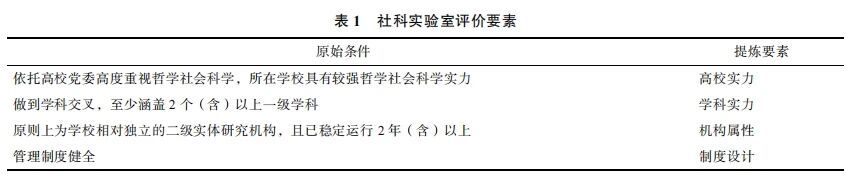
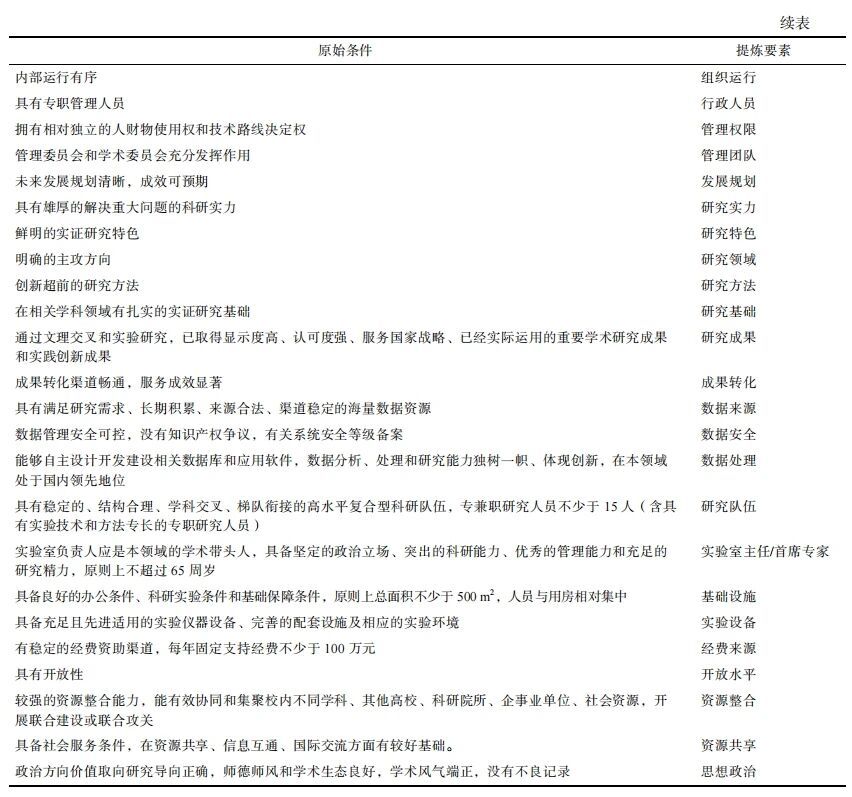
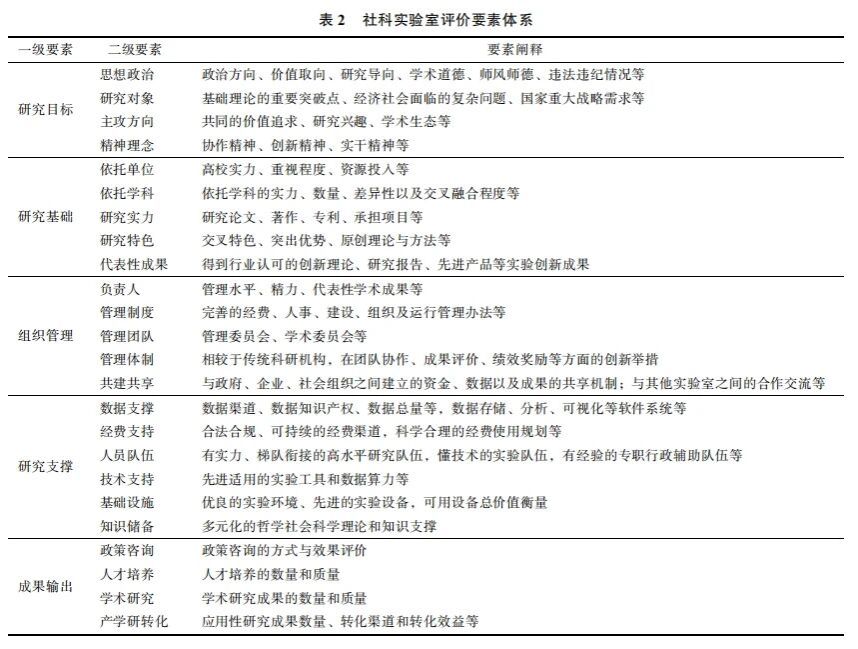
引文格式:李沅傧. 组织范式变革:高校哲学社会科学实验室建设的探索与思考[J]. 实验技术与管理, 2024, 41(3): 285-292.
Cite this article: LI Y B. Organizational paradigm change: Exploration and reflection on the construction of philosophy and social science laboratories in universities[J]. Experimental Technology and Management, 2024, 41(3): 285-292. (in Chinese)
(本文转载自实验技术与管理期刊)